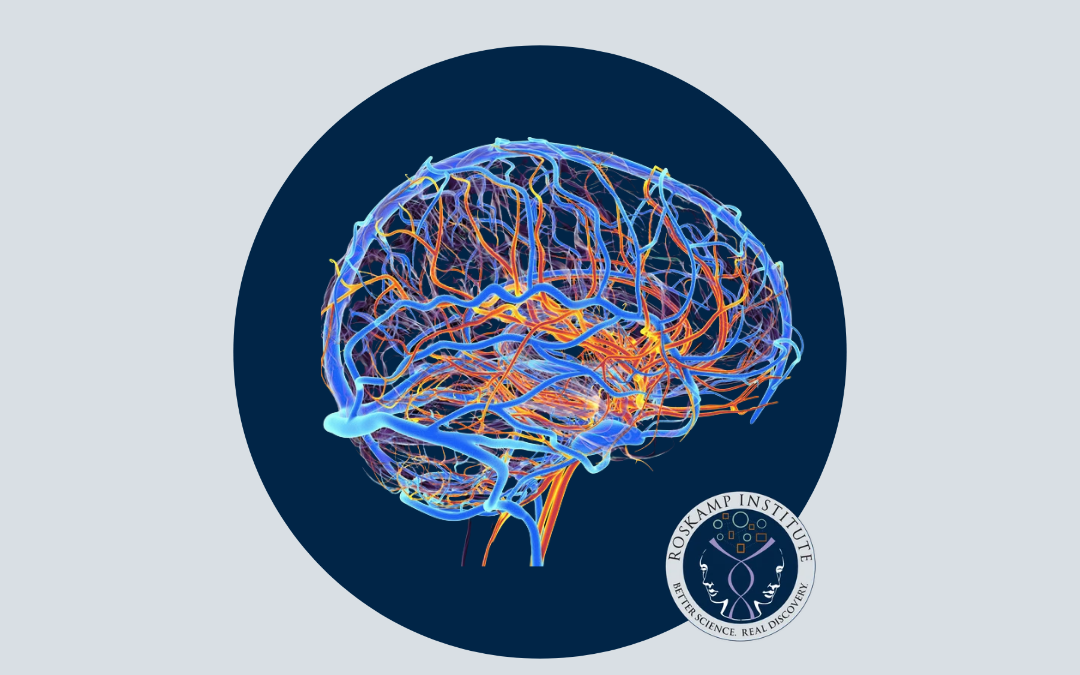
The Roskamp Institute is proud to celebrate Dr. Maxwell Eisenbaum, a graduate of the Institute’s Ph.D. program and current scientist, who has been awarded a new research grant from the National Institutes of Health (NIH), National Institute of Neurological Disorders and Stroke (NINDS).
The federally funded project, “Effect of apoE genotype on eNOS regulation and the development of VCID,” will investigate biological mechanisms involved in vascular contributions to cognitive impairment and dementia (VCID).
VCID encompasses changes in memory, thinking and other cognitive abilities that result from conditions affecting blood vessels and circulation in the brain. Understanding the biological processes that contribute to these changes is an important area of research as scientists work to better understand the complex factors involved in cognitive decline and dementia.
Dr. Eisenbaum’s research will examine the relationship between apolipoprotein E (APOE) genotype and the regulation of endothelial nitric oxide synthase (eNOS), a protein involved in blood vessel function. By investigating how these mechanisms may contribute to the development of VCID, the research aims to expand our understanding of the connection between vascular health and cognitive decline.
The award also represents an important milestone in Dr. Eisenbaum’s scientific career and highlights the impact of The Roskamp Institute’s graduate training program.
Dr. Eisenbaum completed his doctoral training at The Roskamp Institute, where students work alongside experienced scientists conducting research into neurological conditions. The program is designed to prepare emerging scientists to conduct independent research while contributing to the Institute’s broader mission of advancing our understanding of neurological disease.
His progression from Roskamp Ph.D. student to principal investigator on a competitive NIH-funded research project reflects that mission in action.
The new project joins the Institute’s broader portfolio of federally supported research, deepening the scientific understanding that lays the groundwork for future breakthroughs in neurological disease.
Congratulations to Dr. Eisenbaum on this exciting next step in his research career.